
Strength By Fitness
Are there any downsides to a very large weekly exercise volume, YES, read on to find out. Welcome readers to another fact-based Strength By Fitness article
The Question
Are there never any downsides to a huge weekly exercise volume?
Our longform answer
An excessively large weekly exercise volume, or excess volume during a long training block, will absolutely result in some aspects that are unfavourable for several reasons.
This includes a person’s daily quality-of-life metrics, but far more importantly, too much effort and/or volume will result in an elevated injury risk.
Other aspects that can see a mixed response include longevity.
Yes, I know, in general, the fitter you are, the better your health outcomes over time, and that is a big, very clear, and universal outcome.
But that is in comparison to people who are living a more sedentary life and/or racking up far unhealthier lifestyle habits. If we instead compare healthy, fit people with each other, then we can absolutely start to see that there are some aspects of health outcomes and maybe even longevity that can dip once volume and/or effort goes off the charts for far too long.
Far more obvious, however, is current sports and fitness performance, and people’s measurable fitness progress.
Once again, let me emphasize that we are not talking about a balanced and proper fitness plan here. We are talking about people who take their weekly fitness and sports habits into excessive territory for too long, relative to their capacity for recovery.
This can mean too much volume, too much effort, and lackluster technique, or all of it.
Some examples
Some people run so much that they end up with impact-based foot, ankle, knee, and hip issues.
Others strength-train way too hard and end up causing serious harm to themselves by acutely tearing an entire muscle in half or partially tearing it.
Bad wear and tear, over time, is a very real thing too, whether it’s strength training done wrong, contact sports like soccer, ice hockey, rugby, and martial arts, or non-contact sports like running and baseball.
Muscles, tendons, and bones love maintained weekly exercise, and they love a good-enough effort. These two things are incredibly beneficial for pretty much every biological aspect of the human body and mind.
But it needs to happen within the envelope of our capacity for recovery.
Acute injuries can always happen if technique and/or load are taken far beyond what that person can handle, either acutely or over time.
Yes, bad luck applies too.
Most people (let’s say 99% of humanity) will never exercise “too much,” as far as volume and effort go. So this is not a scaremongering article that is going to push a “train easy” rhetoric.
No, at Strength By Fitness we love to train for health, athletic performance, and a high level of fitness capacity, for life.
Doing so requires patience and weekly adherence to both effort and good-enough volume, but it needs to happen within each person’s capacity for recovery, because injuries and bad wear and tear have no winners and no benefits.
So, lets move on holding on to one, clear thought, most of humanity do not train enough, if at all, and out of those that do train on a weekly basis, 90% does not train hard enough. This is one of 2 main culprits behind humankinds massive health, obesity and lacking physical capacity issues.
The need for Balance
Navigating the price & capacity of recovery
But that doesn’t mean some people don’t overdo it. Acute injuries and excessive wear and tear are constant obstacles that all elite athletes, as well as hard-training but non-competitive fitness enthusiasts, have to learn how to navigate.
Scheduled Habits Require Scheduled Recovery & Nutrition too
Ongoing fitness performance is another one.
Training hard enough isn’t just good, it’s essential if you truly want to tap into the best possible trajectory of progression available to you. But pushing up against your current limits in volume and effort also risks pushing you beyond your capacity to recover.
Daily energy matters
So, there is a balance.
For instance, exercising enough increases the amount of daily energy you have. On the other hand, exercising too much and too hard can instead send you into a full-blown veggie state for the rest of your day, leaving your body and mind utterly fried and zapped of all productivity and daily energy.
Balance, people, respect it, and maintain it.
All big pillars feed each other, make it work in your favor
Proper habits are carved from the very flesh of your life’s puzzle. You and your coach have to learn how to navigate that unique map that is you, and your lifestyle. Your personal goals, your wants, and your do-or-die needs.
The outcome
This fundamental reality leaves us with the following.
Weekly exercise and daily physical activity are the biggest pillars, and the most powerful habits for improving health and quality of life. Yet there are some potential downsides if you overdo it.
So always meet your own price of recovery, every session and every week. That price of recovery is paid with sufficient nutrition, sleep, rest, and recovery. So dial those habits in as well.
Let us talk about a study
How much is too much?
Another example is the following studies, which also serve as the foundation for this Strength By Fitness article.
Endurance training is overwhelmingly beneficial for heart health overall.
However, it can also lead to smaller, and more specific health & heart issues.
In other words, the total outcome is a huge net benefit compared with being sedentary and unfit, but that doesn’t change the fact that some health markers in people who overdo their ongoing fitness plans can be less favorable than they otherwise could have been.
And that is exactly what we’ll see in the study we’re about to discuss.
Study 1 This study looked at total lifetime exposure to endurance training, specifically running, cycling, and swimming.
A higher lifetime volume of endurance exercise, particularly cycling, was associated with progressively increased odds of developing atrial fibrillation and atrial flutter, even though overall health outcomes were clearly better.
And yes, this was independent of the traditional risk factors.
The Master@Heart Study
What we are discussing in this article is built upon data from several cited studies, along with our own decades spanning N1 experience as coaches.
Study one includes a total of 3,939 participants from the Master@Heart study.
Sadly, in study one we are dealing with self-reported exercise history.
So yes, the data is far from perfect.
Still, having a large block of exercise history over a long period of time, and seeing the clearly observed outcomes in two cardiovascular risk factors, atrial fibrillation and atrial flutter, makes for an interesting and relevant subject.
Even when what we see remains a rough correlation at best, it is still relevant.
It is relevant for the same reason that pushing too hard in a single session can knock people off their game for the rest of the day, and for the same reason that effort and volume that are too low will leave you with health, and fitness results that trail far behind what you could have achieved.
In all these cases, the answer is the same.
Finding that solid big-pillar HABIT balance between your price of recovery and your capacity for recovery, quality of life, goals, and life puzzle.
Participants in study 1 were divided into four groups based on their lifetime endurance exercise hours at the time:
Q1: ≤ 1,778 hours (less than)
Q2: 1,779–5,977 hours
Q3: 5,978–12,231 hours
Q4: > 12,231 hours (more than)
An increase in the prevalence of atrial fibrillation and atrial flutter due to higher volumes of lifetime endurance exercise was clearly observed in this data set.
After adjusting for traditional risk factors, individuals in Q2 to Q4, people with more than 1,778 lifetime hours of endurance exercise, had a somewhat higher risk of developing atrial fibrillation or atrial flutter compared with the group that also exercised but had the lowest total lifetime exercise volume.
Individual risk increased as cumulative exercise exposure increased.
Yes, the highest risk was seen in the Q4 group.
1778 hours of exercise, is that really that much?
Now, there might be some sport-specific patterns going on here, mostly related to cycling, rather than a blanket “all endurance training” scenario.
In this study, the associated risk was less pronounced for running and swimming, while the increased risk was primarily seen in people who reported a lot of endurance cycling.
Thoughts from Coach Mike
Keep the above in mind, because at the same time, we always and forever become, and perform, the way we train.
You will never become fast and explosive by always training easy and slow. In other words, we need enough effort, happening often enough, to truly perform and progress according to our potential, our enjoyment, and our goals.
But we also need enough easier volume to drive other aspects of our health and fitness. Enough volume, but not too much, all according to your unique needs, goals, and situation.
Which brings us back to that simple word, balance. Effort can be too low and too high, and exercise modalities can be both too repetitive and too varied, from both an acute perspective and a long-term one.
And the same holds true for volume.
The right habit plan is individual, and progressive and focused on effective big pillars.
The exact plan for you depends on your current fitness level, health status, goals, and needs. Further, it will develop, as you progress.
So there are no universal plans that fit every human on the planet.
But there are solid, fact-and experience-based foundations to build on that can fit smoothly into your life and deliver on your goals while keeping you as healthy and fit as possible.
That reminds me: 1,778 hours of exercise, how much weekly exercise is that?
Let me answer that before we move on. If you exercise 5 hours per week, all year round, that is roughly 7 years of training, which is nothing.
I have exercised for 30+ years already, and I have probably never done as little as 5 hours of exercise in a week, not even as a child. I want to highlight that because this is not a “don’t exercise too much” article.
Even in the highest lifetime exercise group in ANY study, total health outcomes are vastly better than they are for sedentary people or the occasional gym-goer.
So the fact that we can find a small health metric or two that does not benefit even more from double, triple, or quadruple the weekly exercise volume ( or effort ) does not change the immensely positive total impact on health, fitness, and independence in older age that weekly exercise will deliver.
Please, do it all, in the volume, time envelope and effort you can handle.
It is the same with combining strength training and endurance training. That combination might not be optimal for every single person’s personal or competitive goals, but it is by far the best way to maximize overall health and fitness outcomes.
I could also draw parallels to the importance of protein.
The more nutrient-rich protein and fiber we consume per day, per unit of energy, the better our health, fitness, and body composition outcomes overall.
And just because we can find one or two health metrics that might take a small step back compared with a lower protein intake, that small detail does not change the fact that health, fitness, and body composition outcomes as a whole improve in a very clear and measurable way in virtually everyone as protein and fiber intake per unit of energy goes up.
Context and being properly informed are always good and beneficial.
This way, we can all carve out health, food, fitness, and lifestyle plans that are perfect to a T just for us.
This is also why I have included studies 2 and 3 below as cited sources. Sedentary, out-of-shape people see big improvements in health, fitness, daily quality of life, and productivity even when their new habits are just a little bit better, and this can be scaled over time to a world class habit level that looked absurd in the beginning.
You can see this in the “let’s move 5 minutes once per hour” study, or in the finding that older adults who started exercising after age 50 quickly developed heart health that rivaled people 20 years younger.
Exercise and effort are always good, and 99% of humanity needs more, not less.
Adherence lifts the performance floor & ceiling
Adherence over enough time raises the performance floor to incredible heights, for every human being, and in turn, the performance ceiling climbs even higher. Adherence is therefore key for everyone, from the world’s best to the sedentary person that´s just starting out.
No matter your current level or goals, weekly adherence to a suitable effort level and training volume is the alpha and the omega, the beginning and the end of sustained progression across all stages of life.
It is the foundation for health, fitness, increased daily energy, quality of life, and lifelong, injury-free physical capacity.
But more is not always better.
The ongoing need for balance means understanding the dynamic and constantly shifting relationship between effort, volume, rest, nutrition, persistence, sleep, recovery, and variety.
Biking, swimming, and skiing, for instance, can be amazing parts of a high-performance runner’s ongoing fitness plan.
They all complement and improve cardiovascular health and fitness, yet they do so in different ways than running.
You load tendons, bones, and muscles differently, which is both good and bad.
You need enough repetition and time spent training to develop skill and capacity over time to become a efficient high-performer at what you do.
Not to mention that the blunt impact of each running step has its own advantages for bone, tendon, and muscle health.
But balance strikes again, because you also need to respect the upper limits of what bones, muscles, feet, and tendons can absorb from the same repetitive movement.
This is where cross-training benefits come into play. And vice versa, biking is great for fitness and health.
Now, maybe there really are some heart-health aspects that benefit specifically from smooth cardiovascular swimming or street‑pounding runs, because sitting on a bicycle for hours every day clearly affects bones, tendons, your muscle chain, and your arteries in a different way than swimming and running do.
Either way, whether it’s too much weekly bodybuilding-style isolation training that does little for strength and explosive athletic performance, or too much running ( which will wreck your feet, among other things ), or not enough strength training and heavy loading, or simply not running or being physically active at all, any extremes all come with their own trade-offs.
But doing nothing is always, way worse.
Finishing words for this public article.
There is a clear line for everyone where we each can find the perfect balance for ourselves. A balance that delivers the outcomes we want and need for habits, health, quality of daily life, and fitness, while fitting perfectly into our ongoing life puzzle.
A study like this is not telling you to be afraid of running or of biking too much. The two observable risk factors in this study do not change the fact that elite endurance athletes and fitness enthusiasts who train endurance weekly have much better overall health outcomes.
The data in this study simply mean that health is not one single thing you can push infinitely. It’s many different metrics. While 99 different aspects can improve with more or harder training, some smaller, specific health markers can take a small step back if you overdo it.
We see the same pattern with strength training. Train too light and you will never tap into the health and fitness benefits of becoming truly strong and athletically explosive. Go too heavy and too crazy and you will, at some point, run into some level of injury.
Build more lean muscle and you’ll see your body composition and health drastically improve, and yes, that applies to your fitness capacity too.
But focus too much on super isolated hypertrophy training in the gym instead of explosive, strength based performance and athletic capacity, and your overall fitness will eventually lag behind what it could easily have been.
Finally, do not box yourself in like so many do.
Training only for hypertrophy might be fun and beneficial for a competitive bodybuilder.
But doing that while also running, swimming, practicing martial arts, climbing mountains, and training for a high level of explosive strength will 100% make you fitter and healthier, while still giving you a truly strong, capable, and muscular body.
So, do it all, in the effort and volume that work for you.
And if it’s too much to manage on your own, reach out to us for unlimited online coaching and tap into a better, smarter, fitter, and healthier lifestyle. What we do here at Strength By Fitness works for every single client we work with.
Related Content
Complete view of Higher-SPC, High-protein foods & fitness outcomes.
Obese & Nutritionally Deficient.
Quality Sleep and our Habits.
recent articles
Steroids vs Natural Strength Training. Member & Client Exclusive Strength By Fitness Article.
Not everyone trains for health & fitness. In this article Strength By Fitness compares organ growth between 3 groups. A high-protein control group, a steroid free, high-protein strength training group and a third fitness group that abused steroids.
Member Exclusive Article: Plateaus vs Double Progression. Are plateaus even real?
Let us talk about plateaus today, and dive deep into this subject. Because, lets face it, are they even real? Welcome to another fact-based Member & Client Exclusive Strength By Fitness article.

Motivational Interview Coaching with Strength By Fitness
Strength By Fitness is not just expert coaches in the field of fitness, health, recovery, adherence, habits, and nutrition. We coach behaviour, habit changes, and account for the mental aspect when a client needs that deeper help.
Motivational interview coaching is a guided coach-client process that helps each client build their own drive and capacity for change.
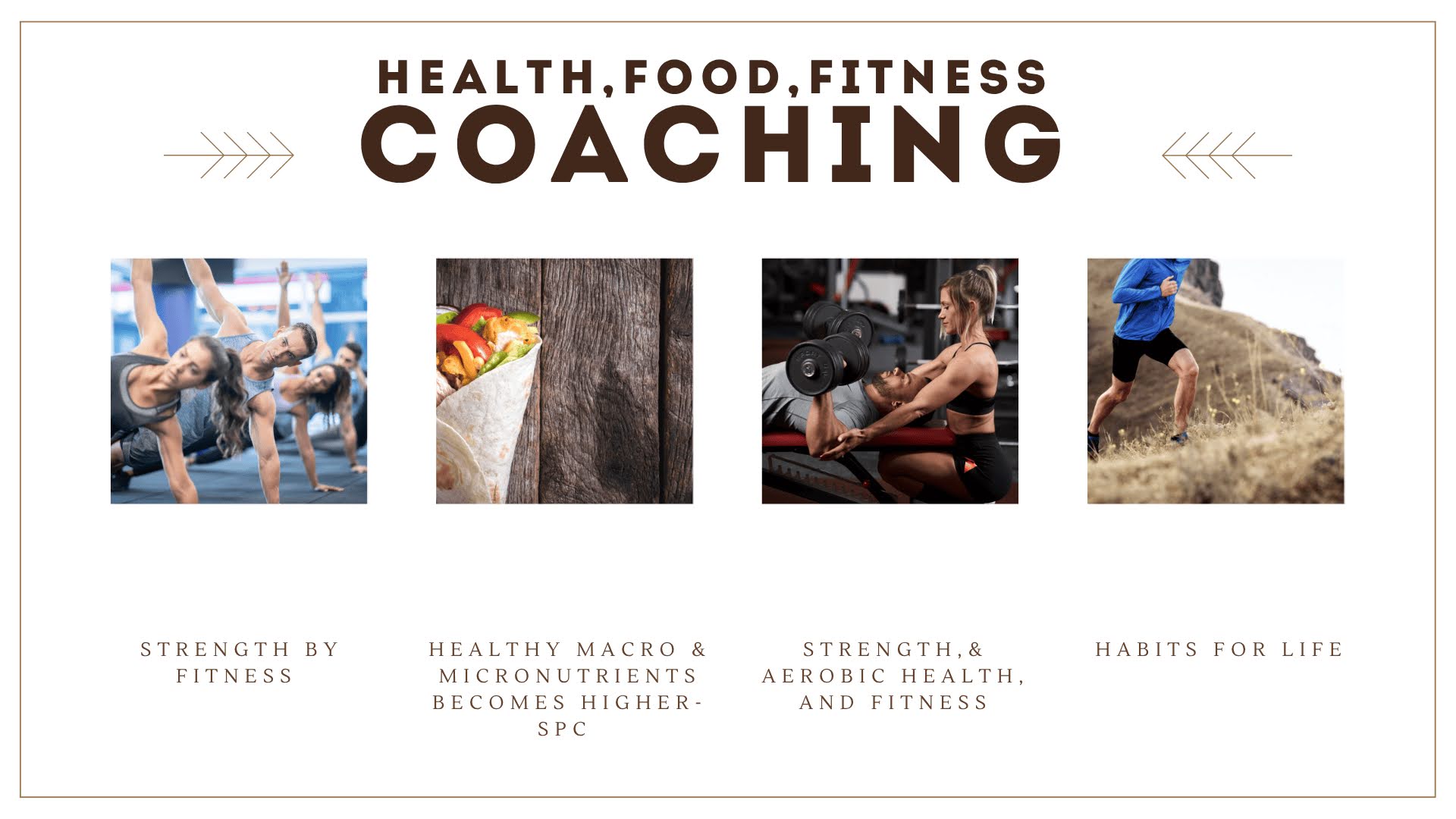
Coaching & Personal Training: Online, In-person, & Hybrid
You can be a Strength By Fitness client in several ways: In-person at Cape Quarter, Zone Fitness, and online, no matter where in the world you live. Or combine both in-person & online for a world-class all-year-round hybrid coaching client-coach journey.

Member Exclusive Article: Energy Expenditure, Everything You Need to Know.
Habits always matter because that is what drives the direction of your trajectories. Welcome to a fact-based article on energy expenditure from Strength By Fitness.

Member Exclusive Recipe: Home-made Crispy Cold Tofu Mix. High-Protein, Higher-SPC
Strength By Fitness presents a homemade, crispy, fried, and cold tofu mix. This is one more trademark High-protein and higher-SPC recipe, loaded with health and fitness-friendly nutrients per unit of energy.
Nutrients: Protein 89g, Fiber 50g, and SPC range of 51 to 65.
We appreciate you
so stay healthy & never stop training
Contact
Private In-App Messaging is Available For All App + Coaching Clients
Adress
Coaching Is Available Online Via App on IOS & Google Play, and In-person, On-location.
Copyright 2026 Strength By Fitness.